Sports Tent Comparison: PVC Fabric vs. Hard Steel vs. Glass Sidewalls
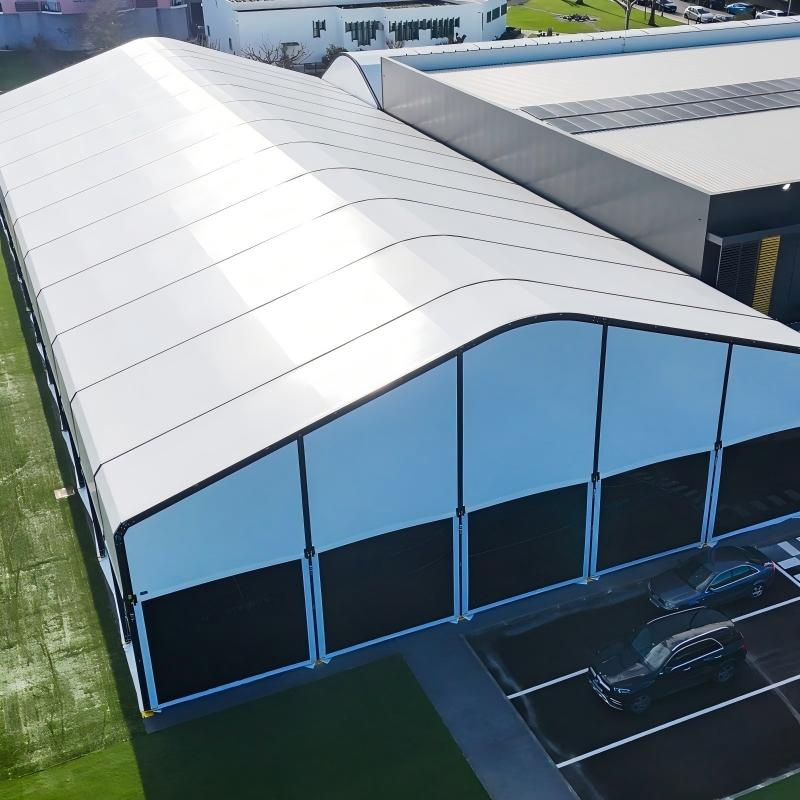
Large span aluminum frame sports tent — the frame is fixed; the sidewall is the variable.
Quick answer: A sports tent can be enclosed with one of three sidewall systems — PVC fabric, hard steel wall, or glass wall. All three mount on the same load-bearing platform: a Hardpressed Aluminum Alloy T6061/T6 frame under an 850 g/sqm white PVC roof. The frame does not change. The sidewall does — and that single choice determines daylight, thermal behaviour, spectator visibility, reconfiguration effort, and which sport the structure serves best.
This comparison is written for importers, sports club operators, facility planners and procurement teams who are choosing between sidewall configurations for large span sports tents, modular sports halls and indoor sports tents — not for readers who only need a product overview.
Problem Definition: Why the Sidewall Is the Constraint That Decides the Project
Most sports tent evaluations start with span, because span determines whether a full-size court fits under the roof. Widths from 10 m to 60 m, unlimited length and sidewall heights of 2.7 m, 3 m, 4 m, 6 m or 8 m cover most single-court and multi-court layouts, so that part of the specification is usually settled quickly.
The sidewall is where projects stall. Three constraint groups appear in almost every evaluation:
- Performance constraints — how much daylight reaches the playing surface, how the hall behaves thermally in the local climate, and how much noise leaves the site.
- Operational constraints — whether the structure is installed once and left in place, or moved between events and seasons, and whether wall sections must open, close or be removed during a season.
- Compliance constraints — which product and which size the certification documentation actually covers, because a record issued for one product line is not automatically valid for every delivered configuration.
Because all three sidewall types share the same T6061/T6 frame, they cannot be separated by structural grade. They must be separated by these constraints instead.
Industry Background: Why Sidewall Choice Became a Mainstream Procurement Question
Data from adjacent categories explains why the sidewall question moved from a niche engineering detail to a standard line item in procurement files.
- Grand View Research projects the global camping and shelter tent market to grow from USD 5.40 billion in 2023 to USD 8.30 billion by 2030, driven by outdoor sports and experiential travel.
- Verified Market Research values the global padel court market at USD 3.81 billion in 2024, with a projected value of USD 12.51 billion by 2032 — padel is a direct demand driver for specialized court tents.
- Grand View Research estimates the global sports tourism market will grow at a CAGR of 16.8% from 2026 to 2033, increasing demand for temporary stadium and event tents.
The supply side is engineering-led rather than rental-led. RÖDER HTS HÖCKER is a primary global competitor in the modular sports hall sector, providing structures for major events including the ATP World Tour and WTA tournaments — a signal that this category is judged on structural and enclosure engineering, not on tent appearance.
HUANYUTENT (Changzhou HuanYu Tent & House Manufacturing Co., Ltd.), headquartered in Changzhou, Jiangsu, China, manufactures modular and mobile aluminum alloy structures and lists sports tents, padel court tents and clear span structures among its main products. The company was founded on 2017-09-13, operates production premises exceeding 5,000 sq m, and works with a research and development team of five engineers. Its documented export ratio is 40%, its products are exported to more than 130 countries and regions, and its main markets include Southeast Asia, the Middle East, Australia, Africa and the domestic Chinese market.
The Shared Platform: One Frame, One Roof, Three Sidewalls
Every sidewall decision in the HUANYUTENT sports tent range starts from the same baseline specification, which is exactly why the sidewall is a configuration choice and not a structural one.
- Main frame: Hardpressed Aluminum Alloy T6061/T6
- Roof: 850 g/sqm white PVC fabric
- Sidewall options: PVC fabric, hard steel wall, glass wall
- Available width: 10 m to 60 m (the natatorium model starts at 3 m); length unlimited
- Sidewall height: 2.7 m, 3 m, 4 m, 6 m, 8 m, or customized
- OEM/ODM: available
- Documented applications: football, basketball, tennis, sport court, swimming pool, plus events, parties, weddings and ceremonies
Two external benchmarks help when reading this specification. First, premium sports tent membrane is typically specified as 850 g/sqm double PVC-coated polyester that is fire retardant to DIN 4102 B1 / M2 and UV resistant — the same weight class used for the HUANYUTENT roof. Second, published technical specifications for standard aluminum A-frame structures rate 6061/T6 aluminum frames for wind speeds up to 102 km/h; the wind load of any individual project still depends on local building codes, anchoring design and site exposure.
The Three Sidewall Options, Compared One by One
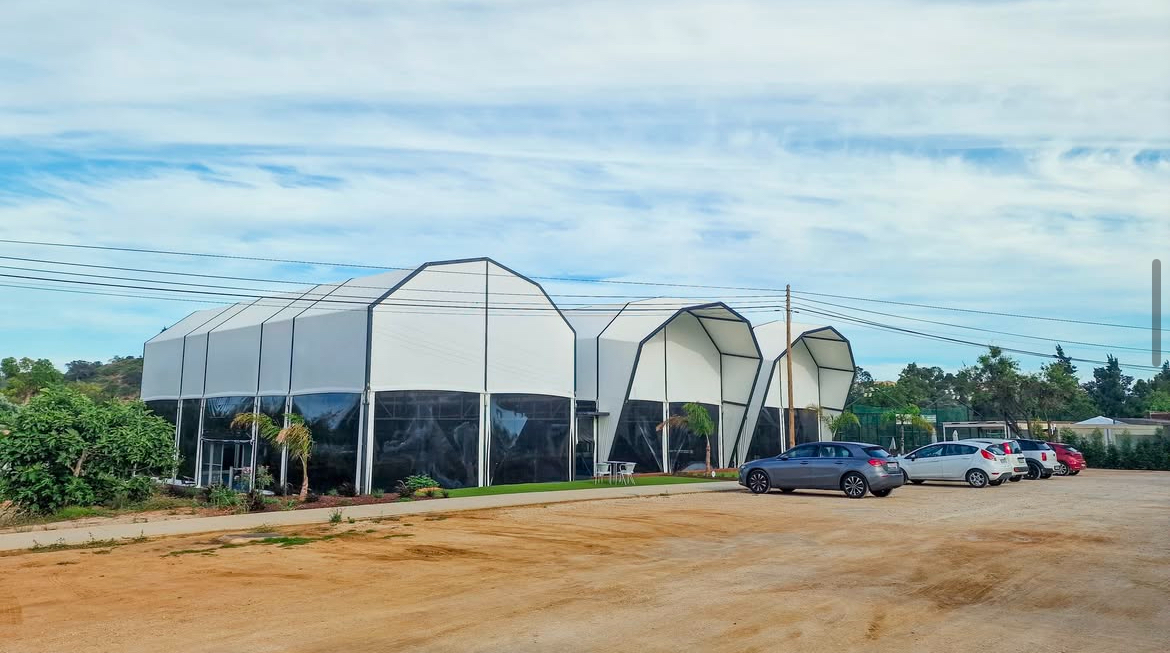
Padel court tents are the clearest example of a project where the sidewall, not the frame, drives the decision.
Option 1 — PVC Fabric Sidewall
A PVC fabric sidewall is a flexible membrane enclosure drawn from the same material family as the roof, and it is the standard lightweight closure used across outdoor sports tents and sports event tents.
- Durability: the membrane is the replaceable element of the structure, so it can be renewed without touching the aluminum frame. The documented performance requirement for the sports hall application is fire-retardant, windproof and waterproof performance.
- Visibility: fabric walls control daylight rather than transmit it. In a PVC-enclosed structure the daylight contribution comes mainly from the roof and the end elevations, so buyers who need wall-level daylight should evaluate the glazed options instead.
- Insulation: a single-layer flexible wall generally has lower thermal resistance than a panelized or glazed wall, which typically means a higher heating and cooling load per square metre of floor.
- Best fit: outdoor sports tents, sports event tents installed and dismantled around competitions, temporary padel or tennis courts, and sites where the enclosure must be shipped and re-erected repeatedly.
- Limit: not a route to permanent-looking architecture, and not the right choice where noise exposure to neighbours is the dominant constraint.
Option 2 — Hard Steel Wall
A hard steel wall is the rigid, panel-based enclosure option. For rigid sports hall enclosures, the documented enclosure structure options include ABS rigid panels and rock wool sandwich panels alongside tempered glass curtain walls, and this rigid and glazed group is the one documented as providing daylighting, thermal insulation, soundproofing and safety.
- Durability: rigid panels resist impact and do not flap or stretch under wind. The trade-off is that damage is a panel replacement rather than a membrane patch.
- Visibility: steel walls are opaque, so daylight and pitch visibility must come from the roof and end elevations. Interior lighting therefore becomes the primary design variable — the HUANYUTENT sports hall equipment list specifies glare-free LED sports luminaires with uniform illumination intended to meet competition-grade standards.
- Insulation: the rigid wall group is the documented thermal insulation and soundproofing route, which matters for venues operating on a 24/7 schedule and for sites close to residential areas.
- Best fit: indoor sports tents, all-weather basketball court tents, multi-year modular sports halls, and courts where temperature control and acoustic separation drive the design. Documented climate control uses integrated heating and cooling HVAC with smart ventilation, reducing energy consumption by more than 30% in some systems.
- Limit: rigid walls add weight, foundation demand and installation time, and they are not a realistic option for a structure that is relocated between events.
Option 3 — Glass Wall
Glass walls are the glazed end of the same enclosure family, documented as tempered glass curtain walls and soft glass sliding doors, and belonging to the enclosure group that provides daylighting, thermal insulation, soundproofing and safety.
- Durability: tempered glass curtain walls are engineered glass systems; the practical durability question is maintenance discipline rather than breakage — cleaning cycles, seals and gaskets. Soft glass sliding doors add an opening mechanism that must also be maintained.
- Visibility: glazed walls deliver the highest level of daylight transmission and external spectator visibility, which is what makes them attractive for stadium tents, club-facing padel facilities and tennis halls where the venue itself is part of the brand experience.
- Insulation: glazed systems sit inside the enclosure group documented for thermal insulation and soundproofing, and they support the same integrated heating, cooling and smart ventilation equipment used with rigid walls.
- Best fit: premium indoor sports tents and modular sports halls, tennis halls adjacent to clubhouses, padel facilities with spectator or hospitality areas, and natatorium projects where a swimming pool tent needs the highest daylight level.
- Limit: glass is the heaviest and most handling-sensitive wall type, the most demanding on foundations and lifting, and the least suitable for frequent relocation.
Sidewall Comparison Table: Durability, Visibility, Insulation and Fit
| Decision dimension | PVC fabric sidewall | Hard steel wall | Glass wall |
|---|---|---|---|
| Structural basis | Hardpressed Aluminum Alloy T6061/T6 frame, 850 g/sqm white PVC roof | Identical frame and roof | Identical frame and roof |
| Wall construction | Flexible PVC fabric membrane | Rigid panelized wall (ABS rigid panel or rock wool sandwich panel documented for rigid sports hall enclosures) | Tempered glass curtain wall / soft glass sliding door |
| Daylight at wall level | Not the documented daylight route; daylight comes from roof and ends | Opaque; no wall daylight | Documented daylighting route |
| External spectator visibility | Low | None | Highest |
| Thermal insulation potential | Generally the lowest of the three | Documented thermal insulation | Can be specified within the insulated enclosure group |
| Sound attenuation | Generally the lowest of the three | Documented soundproofing | Documented soundproofing (system-dependent) |
| Reconfiguration and relocation | Highest — membrane can be removed, replaced or re-erected | Low — requires lifting and panel handling | Lowest — heaviest and most handling-sensitive |
| Interior lighting demand | Lower; roof daylight available | Higher; glare-free LED sports luminaires with uniform illumination documented | Higher; same lighting system applies |
| Typical sport fit | Outdoor padel, event tennis, seasonal basketball | Multi-year basketball, indoor multi-sport halls, 24/7 operation | Tennis halls, spectator padel, natatorium projects |
| Documented certification note | Documentation attaches to the product and size, not to the wall type: the Tennis Tent / Tennis Sports Hall holds SGS approval QIP-ASR244930 for the EU market, and CE certification MICEZ-20161008-GPSD issued by ISET against EN 14115:2002 covers a sports tent size scope including 5x5 m, 10x20 m, 15x30 m, 20x50 m, 12x20 m, 18x25 m, 25x40 m and 30x50 m. | ||
Step-by-Step: How to Choose a Sports Tent Sidewall System
The sequence below reflects the order in which sidewall constraints actually bind during evaluation, from playing envelope to documentation.
- Fix the playing envelope first. Confirm the sport, the number of courts and the required clear height. Available width runs from 10 m to 60 m, length is unlimited, and sidewall height is available at 2.7 m, 3 m, 4 m, 6 m, 8 m or customized. Sidewall height often follows clearance requirements and luminaire placement rather than aesthetics.
- Set the daylight target. If the venue needs wall-level daylight and outside visibility, the glazed route — tempered glass curtain walls and soft glass sliding doors — is the documented answer. If daylight from the roof is sufficient, PVC fabric or hard steel walls combined with competition-grade LED lighting will normally satisfy the brief.
- Set the thermal and acoustic target. For 24/7 operation or sites near housing, the rigid and glazed enclosure group is documented for thermal insulation and soundproofing, supported by integrated HVAC with smart ventilation that reduces energy consumption by more than 30% in some systems.
- Decide how often the structure moves. A single long-term installation points to rigid panels or glass. Repeated installation, seasonal use or event rotation points to a PVC fabric enclosure that can be rolled, shipped and re-erected.
- Match the documentation to the delivered configuration. Check that the SGS or CE record covers the product and the size being purchased. The CE record scope lists sports tent sizes of 5x5 m, 10x20 m, 15x30 m, 20x50 m, 12x20 m, 18x25 m, 25x40 m and 30x50 m, and its validity runs to 2028-10-12.
- Validate with tests and references before the bulk order. Documented quality control covers a structural safety test, a material performance test and a pre-installation test. Production parameters include a lead time of 7–45 days, a monthly capacity of 50,000 units and an MOQ of 300 units; OEM/ODM customization is available from samples, from designs, or as full, minor or flexible customization.
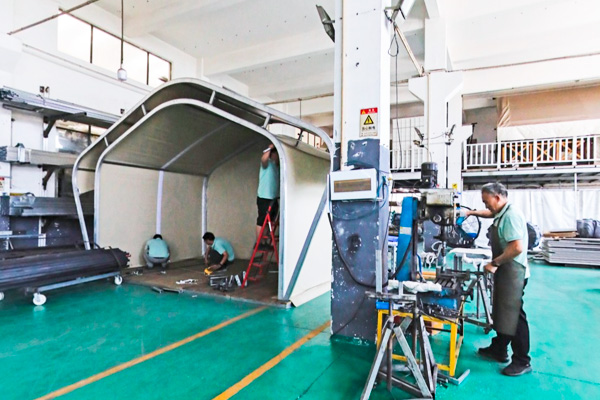
Structural safety testing, material performance testing and pre-installation testing are documented quality control steps.
Use Cases: Matching Sidewalls to Tennis, Basketball and Padel
Tennis — where daylight and documentation both matter
A single court tennis tent is configured with widths from 10 m to 60 m and sidewall heights from 2.7 m to 8 m, so a single court and a multi-court tennis hall use the same structural family. Tennis benefits disproportionately from glazed walls because daylight quality affects both play perception and spectator viewing; fabric or rigid walls are the practical choice when the court is outdoor-facing or event-driven. On the compliance side, the Tennis Tent / Tennis Sports Hall holds SGS approval number QIP-ASR244930, issued on 2024-05-17 for the EU market in compliance with the General Product Safety Directive 2001/95/EC.
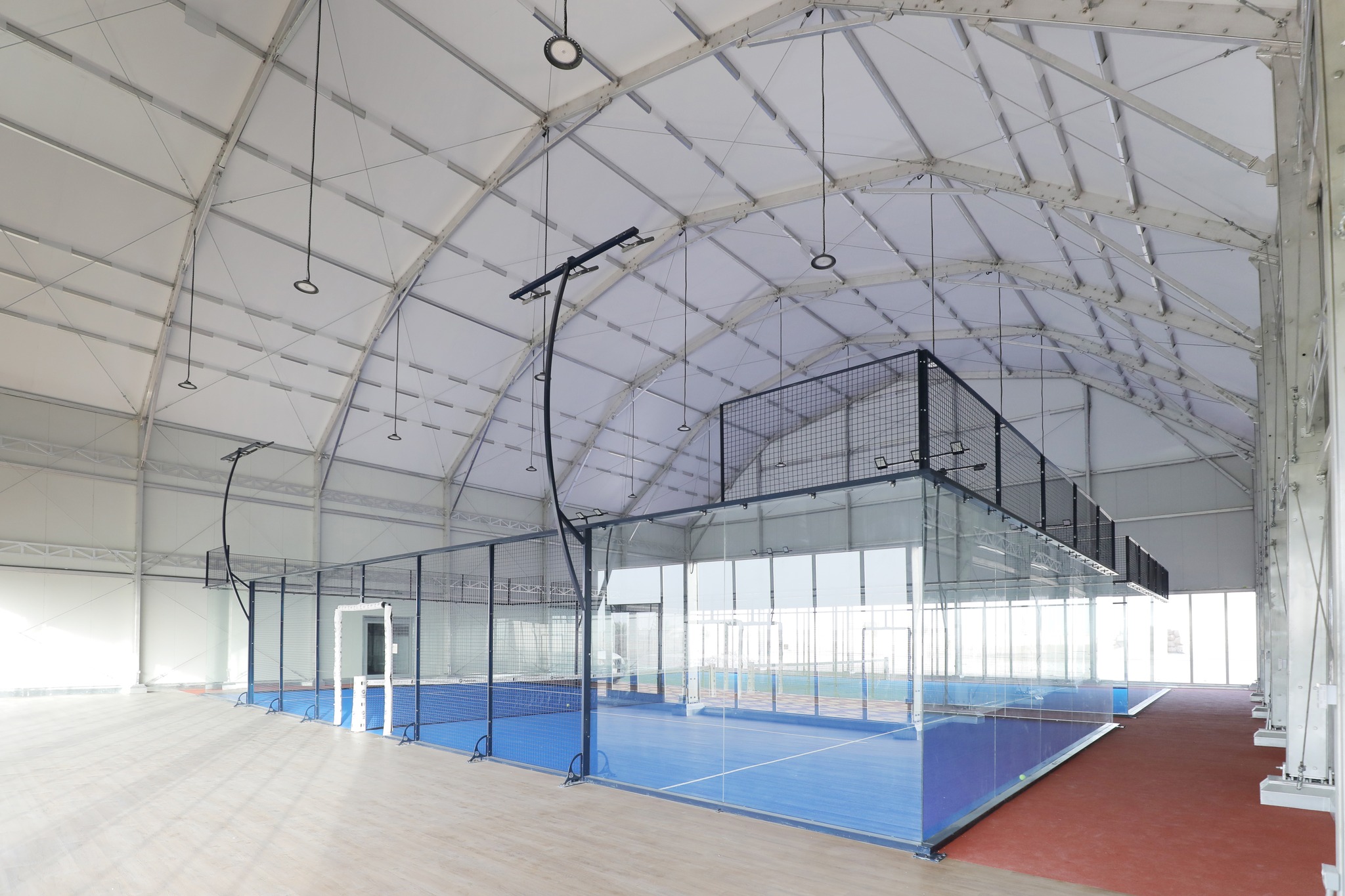
Tennis halls and multi-sport courts share the same aluminum frame platform; the sidewall changes the playing experience.
Basketball — where insultation and lighting hours drive the decision
An all-weather basketball court tent is typically operated over long daily hours and through poor weather, which makes enclosure performance the dominant cost factor. The documented sports hall configuration pairs rigid or glazed enclosure options with removable, slip-resistant, shock-absorbing sports flooring, glare-free LED sports luminaires and integrated HVAC, and lists 24/7 operation as the intended mode. Here the hard steel wall is usually the value option and glass the premium option; a fabric enclosure is normally reserved for seasonal or event-based basketball programmes.
Padel — the sport where the semi-enclosed design changes the trade-off
Padel is where sidewall reasoning shifts. A Portuguese padel club operator runs a 22.25 m × 41.75 m padel tent that has been in stable operation for 3–8 years, and a Greek sports club OEM project installed 22 + 12 units with stable operation over 5–8 years. The documented case notes that the semi-enclosed design shields players from rain, wind and strong sun, avoids the stuffiness of a fully enclosed hall, and can reduce noise impact on the surrounding area to some extent. That describes precisely the fabric-versus-rigid trade-off: a flexible enclosure is easier to reconfigure and faster to deploy, while rigid walls absorb more sound and hold temperature better.
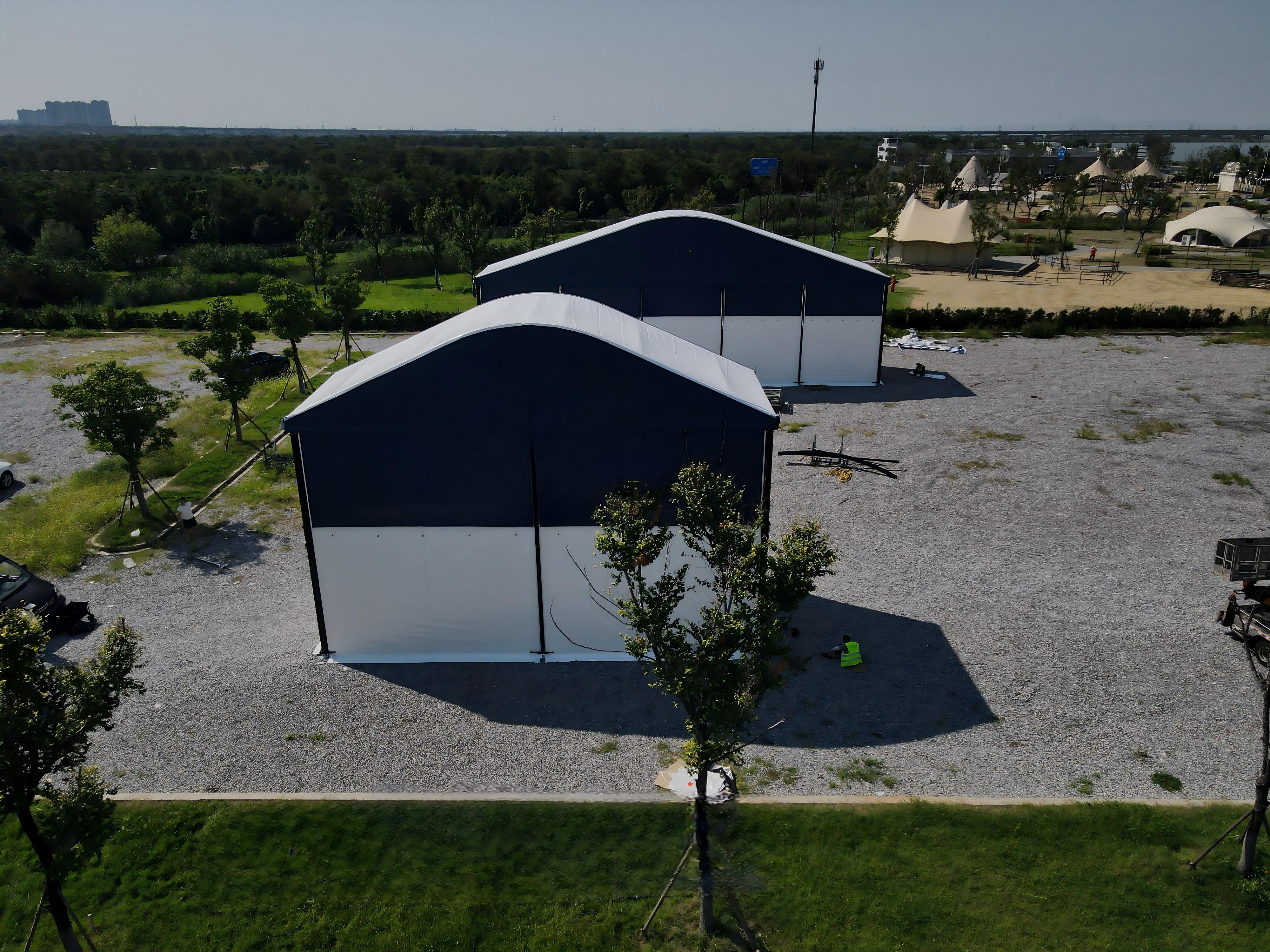
Greek sports club OEM project: 22 + 12 units, stable operation over 5–8 years.
Compliance Constraints for Sidewall and Roof Specifications
Sidewall selection does not change the certification basis of the structure, but it does change what must be documented at handover. Two EU-facing records are documented for the HUANYUTENT sports tent range.
- SGS approval QIP-ASR244930 — held by the Tennis Tent / Tennis Sports Hall, issued on 2024-05-17 for the EU market in compliance with the General Product Safety Directive 2001/95/EC.
- CE certification MICEZ-20161008-GPSD — issued by ISET against standard EN 14115:2002 for the EU market, associated with the natatorium (swimming pool tent) product, with a certification scope covering Sports Tent sizes of 5x5 m, 10x20 m, 15x30 m, 20x50 m, 12x20 m, 18x25 m, 25x40 m and 30x50 m. Its validity runs to 2028-10-12.
Buyers should therefore match product, sidewall family and size against the certificate scope during evaluation, rather than assuming that one record covers every configuration. For structural performance, published specifications for standard aluminum A-frame structures rate 6061/T6 frames for wind speeds up to 102 km/h, while project-specific values remain dependent on local code, anchoring and exposure.
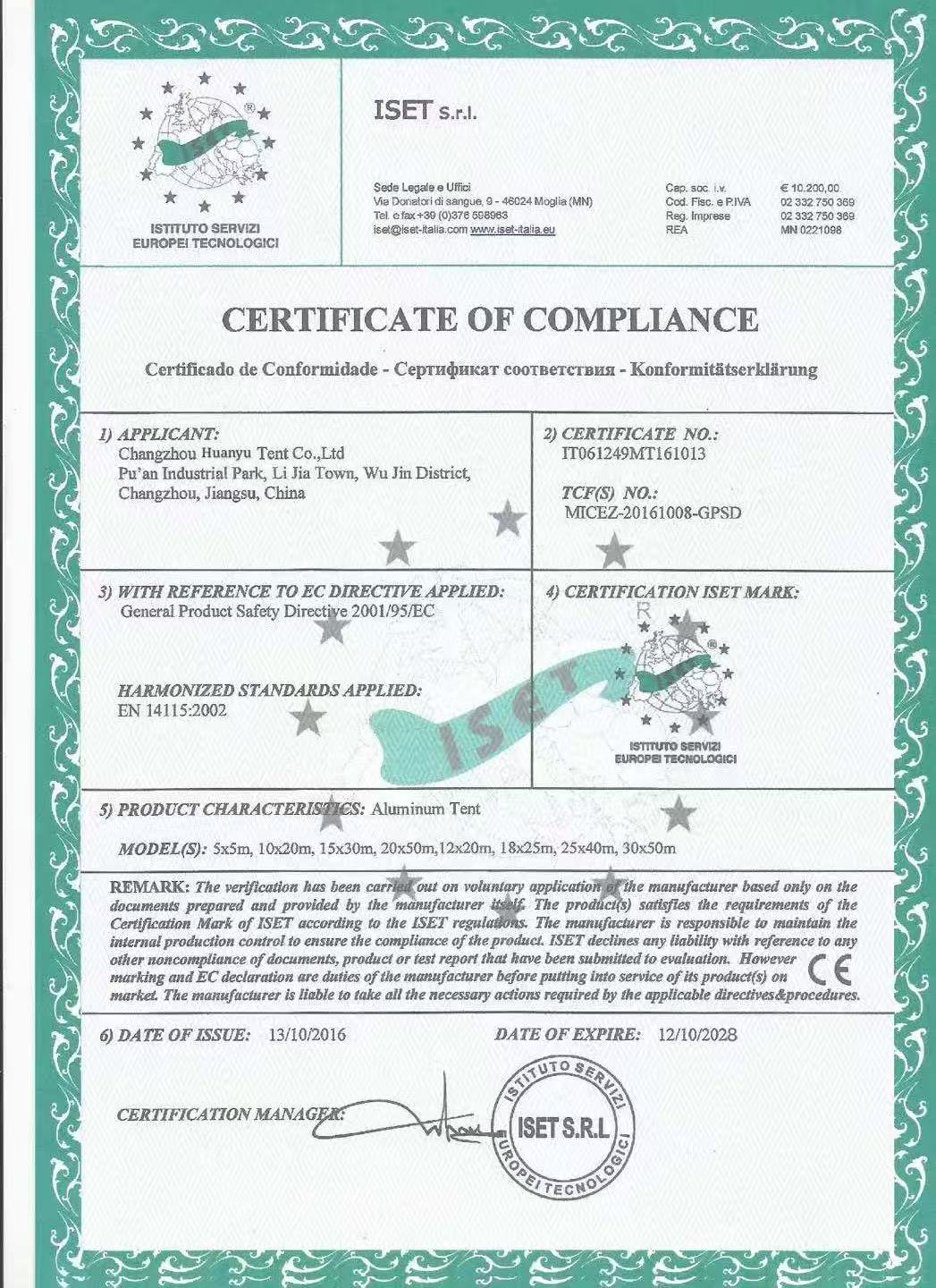
CE certification MICEZ-20161008-GPSD, issued by ISET against EN 14115:2002, valid to 2028-10-12.
FAQ: Choosing Between PVC, Hard Steel and Glass Sidewalls
Which certifications apply to HUANYUTENT sports tents in the EU market?
Two EU-facing records are documented for the sports tent range. The Tennis Tent / Tennis Sports Hall holds SGS approval number QIP-ASR244930, issued on 2024-05-17 in compliance with the General Product Safety Directive 2001/95/EC. A CE certification numbered MICEZ-20161008-GPSD, issued by ISET against standard EN 14115:2002, is associated with the natatorium (swimming pool tent) product and carries a certification scope covering Sports Tent sizes of 5x5 m, 10x20 m, 15x30 m, 20x50 m, 12x20 m, 18x25 m, 25x40 m and 30x50 m, with validity to 2028-10-12. Because each record attaches to a specific product and size, buyers should confirm that the documentation covers the exact configuration being purchased; the sidewall type — PVC fabric, hard steel wall or glass wall — is a configuration choice on the same T6061/T6 frame.
Can sidewall types be mixed or changed on one sports tent frame?
Yes. HUANYUTENT offers OEM/ODM with customization from samples, customization from designs, full customization, minor customization and flexible customization, and lists sidewall options of PVC fabric, hard steel wall and glass wall on the same Hardpressed Aluminum Alloy T6061/T6 frame under an 850 g/sqm white PVC roof. Available width runs from 10 m to 60 m (the natatorium model from 3 m), length is unlimited, and sidewall height is available at 2.7 m, 3 m, 4 m, 6 m, 8 m or customized values. A project can therefore combine, for example, a glazed spectator elevation with fabric or rigid walls on the remaining elevations, provided the configuration is confirmed at design stage.
How do the three sidewalls compare on total cost of ownership?
No published price bands are available, so the practical method is to compare cost drivers rather than unit prices. A PVC fabric sidewall is generally the lightest to transport, the quickest to erect and the cheapest to renew when damaged, which favours structures installed and dismantled repeatedly. Hard steel and glass walls generally add cost through foundation and anchoring demand, lifting and installation labour, glazing systems, and interior lighting and HVAC sizing. For a multi-year indoor sports hall, the higher enclosure cost is usually offset by lower energy and maintenance friction; for an event-driven outdoor sports tent, the flexible membrane normally wins on cost. Actual figures require a project-specific quotation.
How can a buyer validate the sidewall choice before placing a bulk order?
Validation runs through documented testing and reference projects. Documented quality control includes a structural safety test, a material performance test and a pre-installation test, and documented production parameters include a lead time of 7–45 days, a monthly capacity of 50,000 units and an MOQ of 300 units. Reference projects provide the second layer: a Portuguese padel club operator runs a 22.25 m × 41.75 m padel tent in stable operation for 3–8 years, and a Greek sports club OEM project installed 22 + 12 units with stable operation over 5–8 years.
What lead time and after-sales support should be planned for?
The documented lead time is 7–45 days, supported by a monthly capacity of 50,000 units. After-sales support covers remote support, installation guidance and localized installation, which matters when the sidewall choice affects lifting, glazing or panel joints on site. To move from evaluation to a concrete comparison, request a project quotation and — where the design is not yet fixed — a sample or material reference from HUANYUTENT (Changzhou HuanYu Tent & House Manufacturing Co., Ltd.) by email at peterpan@hytents.com, by WhatsApp at +86 15906122421, or through www.hytents.com.
Conclusion: Choose the Sidewall for the Operating Model, Not the Brochure
A sports tent specification is settled by its enclosure, not by its frame. PVC fabric sidewalls fit outdoor sports tents, event tennis and seasonal padel where the structure is shipped, re-erected and reconfigured. Hard steel walls fit multi-year indoor sports tents and modular sports halls where thermal insulation, soundproofing and 24/7 operation matter more than portability. Glass walls fit tennis halls, spectator-facing padel facilities and natatorium projects where daylight and external visibility justify the additional weight, foundation demand and maintenance discipline.
In all three cases the underlying structure remains the same Hardpressed Aluminum Alloy T6061/T6 frame with an 850 g/sqm white PVC roof, available from 10 m to 60 m in width with unlimited length and sidewall heights of 2.7 m, 3 m, 4 m, 6 m or 8 m. That is what makes the sidewall a genuine configuration decision: the buyer is not choosing between three structures, but between three operating models.
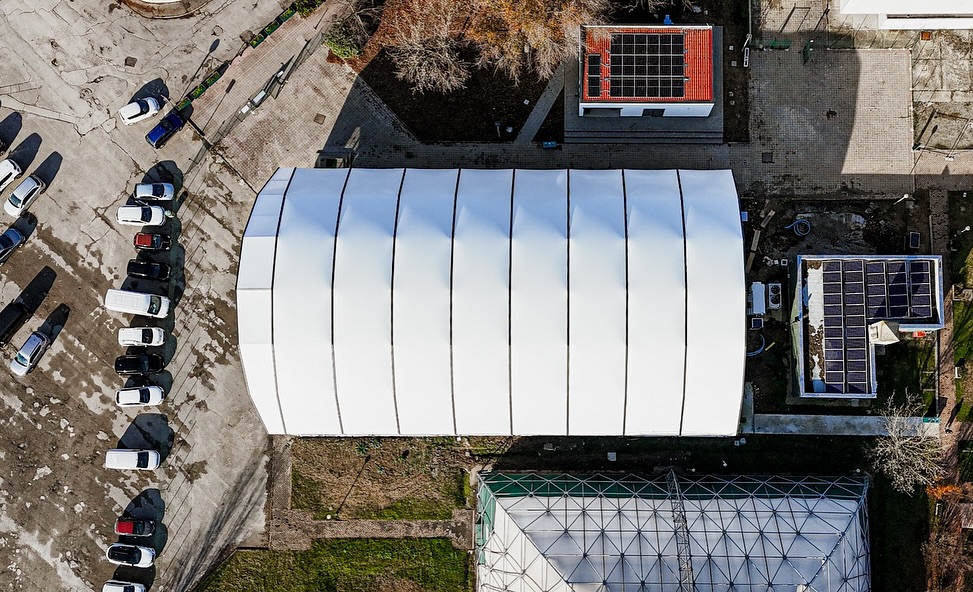
Next step: compare sidewall options on your own court layout
Send your sport, court dimensions, climate and target sidewall height, and HUANYUTENT will return a configuration proposal for a PVC fabric, hard steel or glass sidewall system on the same T6061/T6 frame. Request a sample or material reference and a project quotation before the bulk order.
Email: peterpan@hytents.com | WhatsApp: +86 15906122421 | Website: www.hytents.com
Have Questions or Need More Details?
Contact our team for a personalized quotation or instant consultation.
Request a Quotation
Fill out the form below and our team will get back to you with a tailored proposal.
WhatsApp Direct Chat
Prefer to chat in real-time? Message us on WhatsApp for instant assistance & quick answers.
- Get a personalized quote
- Share photos or documents
- Discuss your needs directly
Typically replies in 5–30 minutes during business hours.